Monday, September 16, 2013

Some good news, some so-so news

Since the last post, I've been in each Langstroth hive once.
Frame of brood in #2
About two weeks ago, I opened #2 and, overall, it looked good.  In the super were two frames of capped honey and two frames with unripe honey (nectar).  There was some brood in the top brood box and some honey.  In the bottom brood box, I spotted the queen and four frames of brood. The girls still haven't drawn any new comb. Last time in, I had put in one of my jerry-rigged foundationless frames.  Not only was no comb drawn, the bees had also removed almost all the wax I had  stuck onto it.  Also, in the last inspection I had moved a frame with old, black wax to the side and this time I took it out and replaced it with another one of my foundationless frames.  (At some point, I'll need to take out my jerry-rigged frames and place a shim or wedge in the top groove like there should be for the bees to draw comb).  The old comb was in a frame with a wax foundation that came in one of the nucs I had purchased in the spring.  It was so dark that the sun barely shone through only a few cells. 
Old, dark comb
Mystery cups on the crossword
This picture is way too light, imagine it even blacker. When I broke it apart Iwas surprised to see small hard cups at the bottom of each cell.  I figure that this was the propolised feces and remains of cocoons from all the previous larvae/tenants of the cells. 
One of the cups in Karly's hand
Old comb broken apart and stacked
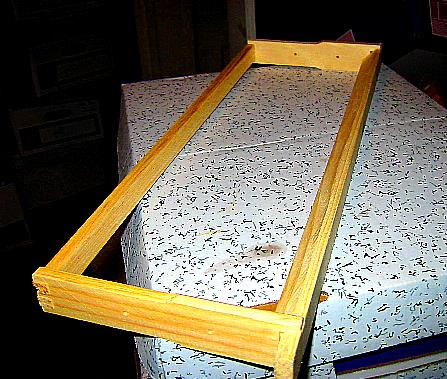
I intend to process all this wax by boiling rather than the solar melter.  I'll see if that method works well for old wax.
Yesterday, with some trepidation,  I looked into #1.  It was time to find out what had happened with the queen (refer to earlier blog).  I had been watching the entrance since last inspection and the amount of activity seemed stable.  However, it is common beekeeping knowledge that the colony can be dying in the hive and look normal from outside.
The first thing I noticed was that there were no longer a plethora of drones.  I saw this in the supers.  There was a lot of brood in the top box, and I spotted the queen.  As you can see, she is fat and golden unlike her small, dark predecessor.
Our new monarch
 I don't know if she was made from the frame I put in, or if the colony had already made a new queen via supersedure.  I may have inspected in the few day window in which the queen has hatched, mated and not yet started laying. 
Frame full of brood
 There was a lot of brood, and I saw some hatching.  Since it takes three weeks for a worker to go from egg to emergence, I knew that the queen had been laying for at least that long.  Even though I would expect a daughter of the old queen to be darker, the timing makes me think that the colony had taken care of matters on their own.
A new worker hatching


 There was some brood in the bottom brood box, as well.  I took out the drone frame and substituted a regular frame with foundation. 
I did get stung twice through my nitrile gloves.  Next inspection, I'll also wear a pair of exam gloves underneath.
I scraped off propolis, amassing a golf ball size hunk.  I think I'll get a propolis trap.

Today I went into #3.  The population still seems static.  I spotted the queen and 2-3 frames of brood in the bottom box.  No new comb, very little honey.  I decided to start feeding them in hopes of stimulating them.  Perhaps there's a problem with the queen, herself.

Sunday, August 25, 2013

Into the hive with Lia and Ken

Yesterday Lia, Karly's friend from Berkeley, Ken, our friend from Scotts Valley and I took a look into hive #3.  The population was not noticeably larger.  One of the brood frames that had been transplanted now had empty cells with some nectar.  We did spot the queen.  There was brood on  2-3 frames, capped and larvae of many ages.  We didn't see any eggs.  I took out one of the frames in the top box and replaced it with a foundationless frame.

Friday, August 23, 2013

Too many drones in #1

A couple of days ago I took a look into hive #1.  There were a lot of bees and the first thing I noticed was a large number of drones.  Lots of drones! Drones everywhere!  Maybe 50% of the bees were drones.  I didn't (don't) know what that meant, but I didn't think it was good.  Usually the drones make up a small percentage of the hive, maybe up to 20% at odd times.  All these drones might mean a laying worker.   This disastrous situation arises when the colony becomes queenless.  With out the suppressive pheromones, one or more workers' ovaries develop and they begin laying.  Since they haven't (can't) mated, all the eggs develop into haploid drones.  This is a very difficult problem to correct, and if not corrected, the colony will die.
I inspected the hive as thoroughly as I could.  I saw no capped brood, worker or drone.  I saw no larvae.  I saw no eggs.  I saw no queen, either.
Remember, this is the hive from which 12 days earlier I had taken a frame of brood to place in #3 and it had two capped queen cells on it.  I figured, then, that either the colony was getting ready to swarm or they were replacing their queen (supersedure).  It hadn't, to my knowledge swarmed, so what was going on?  Had a new queen been raised and not yet started laying?  Had a new queen died or been eaten on her mating flight?  Was there a laying worker?  What to do, what to do?
If there was no queen, perhaps I could take a brood frame from #2 with eggs or very young (<3 days old) and the workers would make a new queen.  So, that's what I did.
I put the top brood box back onto #1, opened #2 and found a frame with the youngest larvae I could identify- as usual, I didn't see any eggs.  I made sure the queen was not on the frame, sprayed the nurse bees with my honey-bee-healthy and placed it into the top box of #1.  I brushed all the bees off the comb of the frame from #1 and put it into the vacancy in #2.  Then closed everything up.
Did I even need to do this?  Will it work?  Stay tuned.  I'll give it a couple of weeks.

Thursday, August 22, 2013

Hive no. 2 is looking good

One frame of brood from hive #2
Five days ago I inspected hive 2.  It looks like its doing well.  There was lots of brood in both boxes, mostly in the bottom box.  I spotted the queen, too.  I took out the drone frame and replaced it with a foundationless frame that I had prepared it by removing the foundation from a frame and putting beeswax in the groove that held the foundation in the top.  Most foundationless frames have a wedge in the top similar to the top-bar tops.  We'll see how this works, like everything else.
There didn't seem to be any new wax drawn, but there were 2 frames with honey in the top box.  The hive looks healthy with all that brood.
I checked the drone pupae for mites.  Out of 17 pupae checked I found 0 mites!

Tuesday, August 20, 2013

Success with Olea's hive cross-combing

Earlier I had seen cross-combing on the distal combs in the top-bar hive.  It took form as a horizontal comb attached to the bottom of several vertical combs.  I expected that I would have to remove all the combs en bloc when it came time to harvest the honey.  At the conference I learned a bit more about top-bar beehives, and now, being an expert, I decided to take care of it now.
I was able to remove the back board and a couple of bars from the very back.  The back board was firmly attached with propolis and took a bit of work.  The last two bars had only a little comb and came out easily.  This is what I saw looking down into the box:
 You can see the horizontal comb protruding.  It crosses 3 or 4 vertical combs.
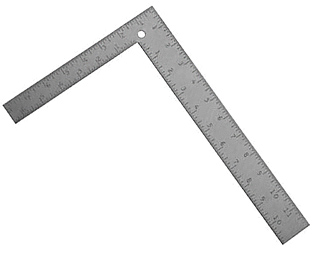
I thought the best way to proceed would be to cut the cross-comb between each bar, remove the bar and cut the unwanted comb off.  So I removed the spacer between the last two combs and discovered that my knife would not reach far enough.  I went into the kitchen, picked out our longest knife and went back to the hive, only to discover that this knife wasn't long enough either.  What did I have that was long, thin and rigid?  I thought of my steel square.   Since it is largish, I was afraid it might be awkward. I went into the garage and there saw my carpenter square.  This looked perfect.  The rule slides out.  And it worked!  It would reach all the way to the bottom of the box.  I gingerly slid it between the frames to cut the cross-comb... and surprise!... the comb just broke away.  It was not firmly attached to the vertical combs so I was able to break it off using my rule, hive tool and hands.
Here is how it looked after:
Cross comb all gone!
I looked at a few more bars.  There are 21 bars altogether.  Starting at 17 there were at least four combs of capped honey.  I looked no further. 
Olea's hive looks like it's doing well and I anticipate a honey harvest from it.

Monday, August 12, 2013

Addendum to today's blog

Kathy Niven wrote back and pointed out what should have been obvious.  If I don't want to take a chance on losing the original queen, I should remove the other queen cells.  So, just now, I hopped into my bee suit and opened the hive.  I thought I remembered which frame I had just placed.  (Another obvious idea:  mark the frames that are special.)  On that frame I saw a queen that looked like the one always there- fat and golden.  There were no queen cells at all.  So I looked at all the frames- no queen cells.  So the workers had already dismantled the cells, which must have been empty.  I can't know if they hatched, hatched and were killed, killed before hatching or hatched and alive, either not being seen or out of the hive mating.  Only time will tell.

It only looks like I know what I'm doing

Hive 3 just didn't seem to getting more populous.  There were only small areas of brood.  I learned that the queen will only lay if a number of eggs appropriate to the number of bees to nurse them.  At the end of July, after returning from the conference, I decided I needed to add more bees to the hive.  I have done this before, adding a frame of brood with its attendant nurse bees.
I hadn't been smoking my bees recently.  I wanted to do it this time because I anticipated that I would be disturbing them more than usual.  I had no pine needles and had used up all my  smoker fuel.  Not wanting to drive out to gather pine needles, I looked around the yard for something to use.  First I tried oak leaves- they didn't work.  Next was raspberry leaves- no good, either.  I came across dried and matted petals from Cecil Brunner.  These worked great.
I went into hive 3, spotted the queen and took out two frames from next to the small amount of brood present (two just in case found lots of brood in #1). In the strongest hive, #1, I went directly to the bottom box where I found only a little capped brood, some larvae, no eggs, no queen and lots of drones, even a drone hatching.  So I looked into the top brood box (after replacing it, of course).  There was capped honey, the queen and a few frames of brood.  I selected a good frame of brood and nurse bees and, after making certain the queen was not on it, placed it in a cardboard box that I had earlier fixed with wood scraps and duct tape to hold frames upright.
I sprayed the transfer bees with my home-made honey-b-healthy and placed the frame into #3, replaced the second frame and closed it up.
I felt like I knew what I was doing! Until...
I wanted to give #3 another frame.  I had looked in #2 a few days after the first transfer.  I didn't think it was strong enough to donate any brood.  A few days ago, I went back into #1 and took a frame of brood as before.  As I  was placing it into #3, I saw two capped queen cells on it, near the bottom, like swarm cells.  I  hesitated- should I squish the cells, put the frame back into #1 or nothing.  I just went ahead and put the frame in.  Now I wonder what will happen when the queens hatch, or will the reigning queen kill them first.  I wrote to Kathy Niven to ask her opinion.  I figure I should leave the hive alone for a couple of weeks and then take a look.  The queen in #1 is small and dark.  If one of her daughters takes over in #3, perhaps she will also be either smaller or darker and I'll be able to tell the difference.  I hope it wasn't a big mistake to put that frame in.  All we can do is wait.